Choosing between a track socket and a traditional outlet begins with one practical question: what is the difference between track sockets and traditional outlets?
A traditional outlet provides fixed power from a wall box. Its position rarely changes. A track socket uses an electrified rail, allowing compatible modules to slide, lock, or reposition along the track. That flexibility suits kitchens, workshops, offices, and display areas where appliances move frequently. It also creates more installation decisions, including rail length, load capacity, grounding, module compatibility, and protection against accidental contact.
The International Energy Agency’s Electricity 2024 report expects global electricity demand to grow strongly through 2026. More connected devices make safe distribution increasingly important. NFPA research also identifies electrical distribution and lighting equipment as recurring factors in home fires. These reports do not separate track sockets from conventional outlets. That limitation matters.
Electrical educator Mike Holt offers a useful safety reminder: “Verify the rating before you add convenience.” The wording is simple. The principle is not.
Track systems can reduce cable clutter and improve access. They cannot replace correct circuit design. A traditional outlet may be the better choice for a permanent, high-load appliance. A track socket may work better beside a movable workbench, where a drill or charger changes position daily. I would not treat flexibility as automatic superiority. Product listings can be confusing, and installation quality may matter more than appearance. This guide compares both systems through usability, safety, cost, maintenance, and real-world application.
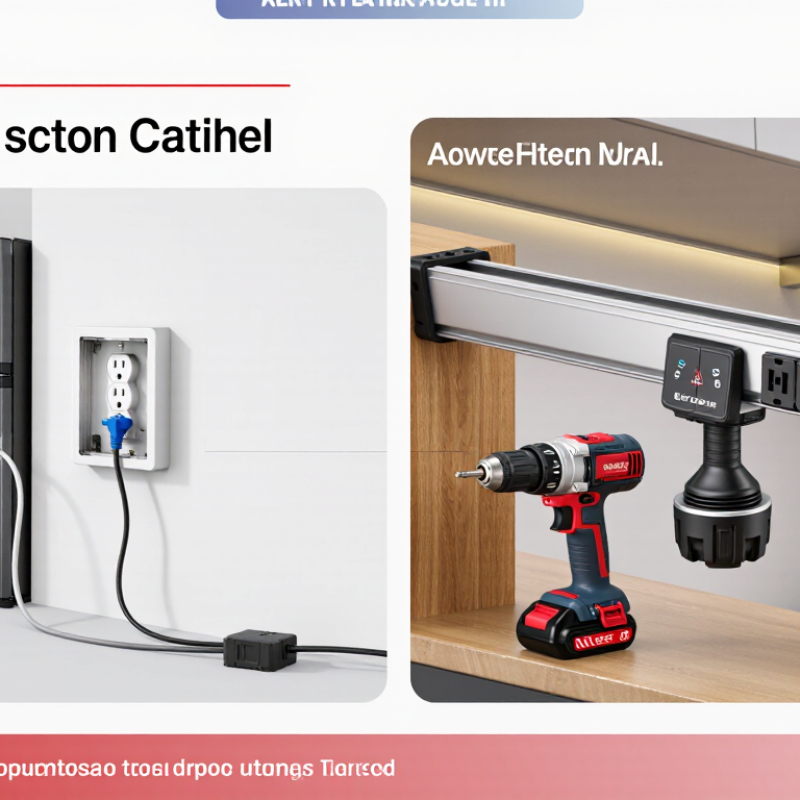
Track sockets and traditional outlets provide electricity, but their structures differ. A track socket uses a powered rail with movable socket adapters. Users can reposition lighting or charging points along the rail. Traditional outlets are fixed receptacles installed at set locations. Their wiring stays inside the wall, while track systems expose more of the connection logic for easier adjustment.
Traditional outlets usually offer simpler installation, wider compatibility, and predictable load planning. Track sockets provide flexibility in kitchens, offices, and display areas. However, flexibility can encourage careless placement. A track may look modern, but it is not automatically safer or more energy efficient. NFPA research on electrical distribution and lighting equipment reports about 35,150 U.S. home fires annually. This figure shows why certified components, grounding, and overload protection matter. The International Energy Agency also reports that buildings use roughly 30% of global final energy. Socket design alone cannot solve inefficient appliances or poor usage habits. The adapter may become the weak point, not the rail.
Tips: Check the rated current, grounding method, and adapter compatibility before installation. Keep high-load appliances on suitable circuits. Do not judge safety by appearance. In older buildings, ask a qualified electrician to inspect the wiring first.
Track sockets and traditional outlets differ mainly in how they distribute power. Traditional outlets sit inside fixed wall boxes. Their line, neutral, and grounding conductors remain in permanent positions. This design is predictable and easy to inspect. Track sockets use an energized rail with movable connection modules. Users can reposition sockets along the track, which suits kitchens, workshops, and changing workspaces.
The difference is visible in the hardware. A traditional outlet relies on a faceplate, terminal screws, and a fixed mounting box. A track system adds insulated busbars, locking adapters, covers, and mechanical guides. These parts must maintain contact during movement. The International Energy Agency’s Electricity 2024 report expects global electricity demand to grow by an average 3.3% annually through 2026. Flexible distribution may therefore become more useful, but flexibility does not remove load limits.
Safety depends on design discipline. NFPA’s analysis of 2015–2019 U.S. home fires recorded about 31,600 fires each year involving electrical distribution and lighting equipment. That figure deserves attention. A track should include overload protection, reliable grounding, protected contacts, and clear current ratings. Traditional outlets are not automatically safer, either. Loose terminals and overloaded adapters create similar risks. One uncomfortable point remains: a neat track can encourage users to add too many devices. Good design needs restraint, inspection access, and instructions that people can understand quickly.
How Track Sockets and Traditional Outlets Are Designed
| Comparison Dimension | Track Sockets | Traditional Outlets |
|---|---|---|
| Basic Design | A socket module attaches to a powered track or rail, allowing electrical connection at selected positions. | A fixed wiring device is installed in a wall box and connected to permanent conductors. |
| Position Adjustment | Modules can usually be moved along the compatible track after power is isolated and the module is released according to the installation design. | The outlet remains in its installed position unless the wall box and wiring are relocated. |
| Installation Method | Requires a compatible track, end components, mounting hardware, and connection to the branch circuit. | Requires a wall box, branch-circuit wiring, cover plate, and a properly rated receptacle. |
| Electrical Rating | The allowable voltage, current, and load depend on the track system, socket module, circuit protection, and local electrical code. | The allowable voltage, current, and load depend on the receptacle rating, branch circuit, circuit protection, and local electrical code. |
| Flexibility | High flexibility for spaces where furniture, workstations, displays, or equipment may change locations. | Limited flexibility because each connection point is tied to a fixed wall location. |
| Number of Connection Points | Additional modules may be added only when the track system is designed and rated to support them. | The number of outlets is determined during wiring installation; adding more points generally requires new wiring or an approved extension method. |
| Space and Appearance | Can create a visible linear feature and may reduce the need for multiple wall outlets, but the track remains part of the interior design. | Usually presents a smaller wall plate and a familiar appearance, but multiple outlets may be needed across a large area. |
| Maintenance | Requires inspection of the track, contact points, locking mechanism, modules, and mounting hardware. | Typically requires inspection of the receptacle, terminals, cover plate, and wall-box connections. |
| Safety Considerations | The track must be fully enclosed or protected as designed, securely mounted, correctly polarized, and installed with compatible modules and circuit protection. | The receptacle must be correctly wired, grounded where required, securely mounted, and protected by the appropriate overcurrent or additional protective devices required by code. |
| Best-Suited Applications | Adaptable work areas, retail displays, studios, offices, kitchens, and other spaces that may be rearranged. | Homes, offices, workshops, and commercial spaces with stable layouts and conventional fixed power locations. |
| Main Advantage | Reconfigurable power access without relocating every connection point. | Simple, familiar, widely supported, and generally economical for fixed installations. |
Note: Electrical ratings, permitted uses, grounding requirements, and installation methods vary by product design and local code. Installation and modification should be performed by a qualified electrician.
Track socket systems use a fixed rail with movable power modules. An electrician installs the rail, feed point, grounding, and suitable circuit protection. Traditional outlets need individual wall boxes and fixed cable connections. This often involves more cutting during installation. Existing walls may require careful patching afterward. Neither option is automatically easier.
Once installed, track sockets offer practical flexibility. Modules can slide along the rail as furniture changes. This suits desks, kitchen counters, workshops, and media walls. Traditional outlets stay in one position. They provide predictable access, but furniture placement must follow them. Track rails also create a more visible, architectural appearance. Traditional outlets look quieter and blend into painted walls. Track systems can feel modern, but not always discreet.
The best choice depends on the room and future changes. A rail may reduce repeated wall alterations during renovations. However, its visible hardware can collect dust or interrupt a clean wall line. Traditional outlets hide more easily, especially beside doors or behind cabinets. In practice, installers should check circuit loads, rail length, mounting strength, and local electrical requirements. Mixing heavy appliances on one track may create avoidable risks. That detail is easy to overlook. A careful layout matters more than appearance alone.
Track sockets and traditional outlets serve the same basic purpose, but their daily performance feels quite different. A track socket system lets users slide power points along a mounted rail. This helps when desks, lamps, or appliances change position. Traditional outlets stay fixed in the wall, offering a familiar and generally sturdier connection. That simplicity still matters in busy kitchens, workshops, and family rooms.
Safety depends on more than appearance. A properly installed track system should include secure covers, reliable grounding, and protection against accidental contact. Its rail and connectors must match the circuit’s rated load. Adding more socket points does not create more available power. A qualified electrician should check wiring, circuit protection, and installation conditions. Traditional outlets have fewer moving parts, which may reduce maintenance concerns. However, loose plugs, damaged faceplates, or overloaded adapters remain real hazards. Small faults can become serious.
Power capacity depends mainly on the circuit, cable size, and protective device, not the outlet style. Track sockets offer better flexibility for changing layouts, but their connectors may wear if moved carelessly. Traditional outlets are less adaptable, yet they often suit permanent appliances better. In my experience, movable furniture exposes the track system’s value quickly. Still, I would not use it automatically everywhere. Dust, moisture, and heavy equipment can challenge its convenience. The practical choice is sometimes less elegant but more dependable. Regular inspection is easy to neglect.
Track Sockets vs Traditional Outlets What Is the Difference?
Which outlet type fits your space depends on how often your electrical needs change. Track sockets offer movable power points along a mounted rail. They work well above kitchen counters, workbenches, and long home office desks. You can reposition a socket when furniture changes. That flexibility can prevent extension cords from crossing the floor. However, the track remains visible and may not suit a minimalist bedroom.
Traditional outlets provide fixed connection points inside the wall. They are practical for bedside lamps, televisions, and permanent appliances. Their low-profile design usually blends better with finished walls. In a small room, two well-placed outlets may feel cleaner than a long track. They also make planning easier when furniture will stay in one position. Fixed layouts can become inconvenient later, though.
Choose a track where tasks move. Choose traditional outlets for stable routines. Moisture, heat, circuit capacity, and installation depth also matter. A kitchen backsplash needs suitable protection and careful placement away from water. A workshop may need several points, but the circuit still has limits. Consult a qualified electrician before installation. I have found that flexibility sometimes encourages poor planning. More sockets do not always mean better access. Measure real appliance cables, desk heights, and walking paths first. The best choice is often a mixture, not a strict winner.
Functional fit score from 1 to 5, based on repositionability, installation flexibility, and suitability for changing power requirements.
Track sockets are generally better suited to workspaces, retail displays, and rooms where appliance positions change because socket modules can be repositioned along the track. Traditional outlets are usually the better fit for kitchens, bedrooms, and other areas with fixed appliance or furniture layouts because they provide a familiar, permanent connection point.
Track sockets use an energized rail with movable power modules. Traditional outlets stay inside fixed wall boxes. The hardware differs.
They suit kitchen counters, workbenches, long desks, and changing workspaces. Modules can slide as furniture moves. This may reduce extension cords across walking paths.
Traditional outlets suit bedside lamps, televisions, and permanent appliances. Their low-profile design blends into finished walls. They look quieter.
Not always. Installation requires a rail, feed point, grounding, mounting strength, and circuit protection. Traditional outlets may require wall cutting and later patching.
No. Safety depends on overload protection, grounding, protected contacts, and clear current ratings. Too many devices can still overload one circuit.
They should not share a track without checking its capacity. Review appliance loads and circuit limits with a qualified electrician. More sockets do not create more power.
Keep sockets away from water and account for heat, moisture, placement, and installation depth. A backsplash needs careful planning. Measure cable reach.
No. A mixed layout often works best. Use tracks where tasks move, and fixed outlets for stable routines. That balance is imperfect, but practical.
Track sockets and traditional outlets are two different approaches to providing electrical power. Track sockets are mounted on a powered rail, allowing users to move, add, or reposition socket modules along the track as needed. Traditional outlets are fixed directly into the wall and usually provide a stable connection in one permanent location. Their designs reflect these different purposes: track systems emphasize flexibility and adaptable layouts, while standard outlets focus on simplicity, familiarity, and reliable everyday access.
The key differences include installation, appearance, capacity, and usability. Track sockets may require more planning and careful installation, but they can reduce the need for multiple fixed outlets and create a cleaner, more adjustable workspace. Traditional outlets are generally easier to understand and maintain, making them suitable for bedrooms, living areas, and basic household needs. When considering what is the difference between track sockets and traditional outlets, users should evaluate the room’s layout, expected power demand, safety requirements, aesthetic preferences, and whether future changes are likely.

Ranko Power