How Many Adapters Can You Put on a Power Track in 2026?

Time:2026-10-31 Author:Liam
0%

“How many adapters can you put on a power track” is not answered by counting its empty connection points. The safe number depends on the track’s rated capacity, each adapter’s load, and the combined demand of connected devices. A track with several open positions can still be overloaded.

Electrical engineer Thomas Domitrovich is known for electrical-safety education. A practical paraphrase of the rating-first guidance he advocates is: “Check the system rating before adding another connection.” This is a paraphrase, not a verbatim quotation. It captures the key issue: adapter count alone says little about safety.

For example, a desk track might carry a monitor, laptop charger, and task light. Their combined load matters, along with the track manufacturer’s limits and any restrictions on adapter types. Check the product label and manual. Look for a maximum adapter count, load rating, and compatibility notes. If those details are unclear, do not guess. Ask the manufacturer or a qualified electrical professional.

There is no universal number for 2026. Product designs differ, and ratings can change between models. Even a track that feels cool may be carrying more than its permitted load. That detail is easy to overlook. A reliable answer starts with the exact track model and the actual devices—not a rule of thumb from another setup.
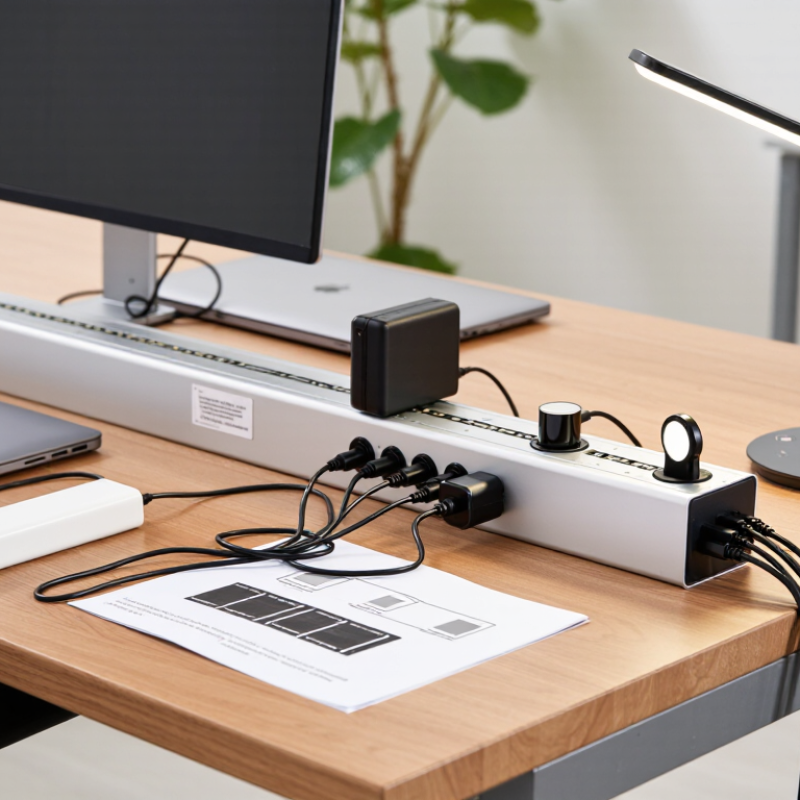
How Many Adapters Can You Put on a Power Track in 2026?

What a Power Track Is and How Its Adapter System Works

A power track is a long electrical rail that supplies power through compatible plug-in adapters. Conductive contacts sit inside the track. Each adapter locks or slides into position, connects with those contacts, and provides an outlet for a lamp or other suitable device. The track’s internal wiring carries power from its supply point to each connected adapter. It is a neat system. But the rail itself does not create extra electrical capacity.

There is no universal adapter count for every track. The safe number depends on the track’s rated load, the circuit supplying it, and the combined power draw of connected devices. A track might physically accept several adapters while still having a lower electrical limit. Check the product instructions and ratings before adding more. I have seen this detail overlooked: empty-looking rail space does not mean unlimited capacity.

Tips: Add up the wattage of devices you plan to use, and compare it with the track’s stated limit. Leave room for future changes. Use only adapters designed for that track, and stop if connections feel loose, become unusually warm, or show damage. If the rating is unclear, ask a qualified electrician rather than guessing.

How to Find the Track’s Rated Capacity and Adapter Limit

A power track does not have one universal adapter limit. Check the rating label, installation sheet, or product documentation for both the track’s maximum electrical load and its permitted number of adapters. These are separate limits. A track may have spare electrical capacity but still restrict how many adapters can be fitted.

Read the load in watts or amperes, then add the input ratings of every connected fixture. If a fixture lists only watts, divide by the supply voltage to estimate current; use its stated input current when available. Stay within the track’s rating, and also within each adapter’s rating. The lowest limit governs. Count every adapter, including empty ones if the instructions set a physical limit. Leave room for safe spacing and ventilation. No guesswork here. If the rating is missing, unclear, or difficult to reconcile, pause before adding more units and ask a qualified electrician or the track’s supplier. I have seen people focus on the number of slots and overlook the load label. It is an easy mistake, and worth checking twice.

How Many Adapters Can You Put on a Power Track in 2026?

There is no universal adapter count. The safe limit is the lower of the track’s manufacturer-stated adapter limit and the number allowed by its rated load.

Illustrative calculation, not a product specification: This example assumes a 1200 W track and a manufacturer-stated limit of 8 adapters. The load-based count is the track’s rated capacity divided by each adapter’s load; the usable count is the lower of that result and 8. Check your specific track and adapter ratings, compatibility, and instructions before use.

How Adapter Compatibility Affects the Number You Can Install

The practical limit is not simply the number of open positions on a power track. It depends on which adapters fit that specific track and how much space they occupy. Check the track and adapter instructions for compatible types, spacing, and load limits. A familiar-looking adapter may not make a secure electrical connection.

Adapter size affects the count. A wide adapter can cover neighboring positions, while a compact one may leave room for another. Even compatible adapters can interfere if their housings or cords overlap. Leave enough clearance for each adapter to seat fully and for cords to exit without sharp bends. Fit matters. Do not guess.

The total electrical load matters just as much as physical fit. Add the wattage of the connected devices, then compare it with the track’s stated capacity. Several small adapters can still supply power to devices whose combined demand is too high. Keep the track’s own rating in view, and do not treat unused positions as extra capacity. If the instructions do not clearly confirm compatibility or limits, pause and check with a qualified electrician. The available space can be misleading.

How to Calculate the Combined Load of Track-Mounted Devices

Adapter count alone does not reveal whether a power track is safely loaded. Add the input wattage of every connected device, including chargers and displays. Count watts, not plugs.

For example, six devices rated at 45 watts each draw 270 watts together. At 120 volts, that is about 2.25 amps.

Use the device’s nameplate current when available; watts divided by volts is only an estimate for some AC electronics.

The U.S. Department of Energy’s 2020 U.S. Lighting Market Characterization reported that LEDs made up about 47% of installed lighting stock. Efficient lamps may use less power, but never assume every track-mounted device is a lamp.

Compare the combined load with the lowest rating among the track, its feed, and its circuit. One easy-to-miss wrinkle: a track can have a high overall rating but a lower limit per adapter.

NFPA 70 (2023) generally requires branch circuits serving continuous loads—those operating for three hours or more—to be sized at 125% of that load.

So a 270-watt group at 120 volts calls for a 2.81-amp continuous-load check, before other circuit loads are counted.

Motorized devices can also draw extra current at startup. Check their nameplates and the track’s instructions; a tidy wattage sum can still miss that surge.

How to Check Safety and Manufacturer Limits Before Adding Adapters

How Many Adapters Can You Put on a Power Track in 2026?
How to Check Safety and Manufacturer Limits Before Adding Adapters

There is no universal safe number of adapters for every power track. The limit depends on the track’s design, its rated capacity, and the instructions supplied with it. Check the label and manual before adding anything. Look for a maximum adapter count, current rating, and total wattage. If these details are missing, contact the manufacturer rather than guessing.

Count is only part of the check. Add the wattage of devices already connected, then include the new device’s rating. Keep the combined load within the track’s stated limit. A small lamp and a heater are not equal loads. Also confirm each adapter is made for that specific track system; a connector that seems to fit may still be unsuitable. Do not stack adapters or use extension arrangements unless the instructions explicitly allow them.

Inspect the track and adapters with the power off. Stop if you notice cracks, loose fittings, discoloration, or a hot-plastic smell. That matters. Avoid covering the track or trapping heat around connected devices. It is tempting to treat unused slots as spare capacity, but appearance tells you little about electrical limits. I would rather leave a slot empty than rely on a guess. If the rating remains unclear, ask a qualified electrician to assess the setup.

How Many Adapters Can You Put on a Power Track in 2026? — How to Check Safety and Manufacturer Limits Before Adding Adapters

Key point: There is no universal safe adapter count for every power track. Follow the track’s instructions and ratings, and do not exceed its stated adapter or load limits.

What to Check How to Verify It Safe Decision Why It Matters
Maximum number of adapters Check the track label, installation instructions, and any stated spacing or adapter-count limits. Use only the number and types of adapters the track is designed and listed to accept. If no limit is stated, ask the manufacturer or a qualified electrician rather than assuming a number. Track designs differ; the available physical space does not establish the electrical limit.
Total electrical load Find the track’s maximum voltage, current, or wattage rating. Add the input loads of all connected equipment. Keep the combined load within the track rating and the supplying circuit’s rating. Use the lowest applicable limit. Too much load can overheat conductors, contacts, or connected equipment.
Adapter and equipment ratings Read the ratings on each adapter and connected device. Check that voltage, current, and intended use are compatible. Do not use an adapter or device whose rating is unsuitable, missing, damaged, or incompatible with the track. The track’s overall rating does not make an under-rated adapter safe.
Adapter compatibility and fit Confirm that each adapter is approved for the specific track type and locks or seats fully as instructed. Do not force, modify, or use an adapter that is loose, obstructed, or not specified for the track. A poor connection can cause arcing, heat, or loss of reliable grounding.
Stacking or connecting adapters together Check the instructions for both the track and adapter for permission to connect adapters in series. Do not stack adapters or plug one adapter into another unless the product instructions expressly permit it. Stacking can create unstable connections, block ventilation, or exceed ratings.
Grounding and polarity Check the product markings and instructions, and make sure the track, adapter, and equipment retain the required grounding and polarity. Do not defeat a ground pin or use an adapter that prevents required grounding. Proper grounding helps reduce electric-shock risk if a fault occurs.
Heat, damage, or unusual operation Look for discoloration, cracking, looseness, buzzing, burning odor, sparks, or unusual warmth during use. Stop using the track and disconnect power if it shows signs of damage or abnormal heating. Have it checked by a qualified professional. These signs may indicate a failing connection or an electrical fault.
Installation and local requirements Confirm that the track is installed for its intended location and use, and check applicable electrical codes and instructions. Have installation or capacity questions assessed by a qualified electrician, especially for fixed or commercial installations. Requirements can vary with the installation, circuit, location, and local rules.

FAQS

Does a power track have one universal adapter limit?

No. Check its rating label, installation sheet, or product documentation for separate load and adapter limits.

How do I check the electrical load?

Add the input ratings of all connected fixtures. Stay within the track’s capacity and each adapter’s rating. The lowest limit governs.

What if a fixture lists watts but not current?

Divide its wattage by the supply voltage to estimate current. Use the stated input current when available.

Should I count empty adapters?

Yes, if the instructions set a physical limit. Count them. It is easy to overlook.

Can I use every open position on the track?

Not necessarily. Adapter size, compatibility, spacing, and electrical load all affect how many can be installed.

How can I tell whether adapters will fit together?

Check the instructions for compatible types and required spacing. Wide housings may cover nearby positions, and cords need room to exit.

What should I do if the rating or compatibility is unclear?

Pause before adding adapters. Ask a qualified electrician or the track’s supplier. Guessing is not worth it.

Do unused positions mean the track has spare capacity?

No. Open positions do not increase the track’s electrical rating. I have seen that detail missed before. It deserves a second look.

Conclusion

How many adapters can you put on a power track? The answer depends on more than the number of available connection points. A track’s rated capacity and stated adapter limit set the basic boundaries, while adapter compatibility determines which devices can be installed and how they fit along the track. Check the track’s specifications and use only adapters designed for that track system.

Before adding devices, calculate their combined electrical load and compare it with the track’s rated capacity. The number of adapters you can safely use may be lower than the physical space available if their connected devices draw substantial power. Always follow the manufacturer’s instructions, account for any stated limits, and avoid exceeding either the adapter count or load rating. When specifications are unclear, verify them before installation rather than relying on appearance or assumptions.

Liam

Liam

Liam is a dedicated marketing professional with a profound expertise in the industry, where he excels at highlighting the unique advantages of our core products. With a keen understanding of market trends and consumer needs, Liam frequently updates our company’s professional blog, providing......